Footwear industry data book covers athletic, non-athletic, sustainable, and traditional/non-sustainable footwear market.
Global footwear industry data book is a collection of market sizing information & forecasts, trade data, pricing intelligence, competitive benchmarking analyses, macro-environmental analyses, and regulatory & technological framework studies. Within the purview of the database, such information is systematically analyzed and provided in the form of outlook reports (1 detailed sectoral outlook report) and summary presentations on individual areas of research.
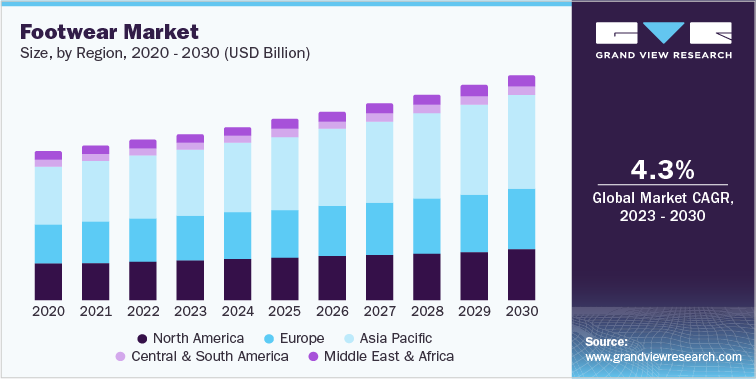
The global footwear market size was valued at USD 387.74 billion in 2022 and is expected to grow at a compound annual growth rate (CAGR) of 4.3% from 2023 to 2030.
Athletic Footwear Market Analysis & Forecast
The global athletic footwear market size was valued at USD 133.13 billion in 2022 and is expected to grow at a compound annual growth rate (CAGR) of 5.0% from 2023 to 2030. Growing enthusiasm and awareness regarding the health benefits of sports and fitness activities, the flourishing retail e-commerce sector worldwide, and rising levels of disposable income of consumers are estimated to be the key trends stoking the market growth. Youngsters are getting keen on adopting a healthy lifestyle and are hence participating actively in sports and other related activities. At the same time, people have started realizing that sports and fitness activities can help ensure good health and reduce the risk of chronic disorders such as depression, cardiovascular diseases, and diabetes.
People are also increasingly realizing the importance of using the appropriate type of shoes for sports activities to prevent muscle injuries, leg injuries, knee pain, hip pain, and back pain. As a result, the demand for athletic shoes is expected to register a sharp rise over the coming years. The demand for athletic footwear products is increasing rapidly owing to their usage in various conditions. Athletic footwear products are used by various consumers such as athletes and climbers. In addition, there are fitness-conscious customers, gym-goers, and people who use them for mild fitness routines. Various types of athletic footwear available in the market are prepared from high-quality raw types, such as leather, foam, and plastic, which involve the use of advanced chemical additives.
Increasing environmental concerns are restraining the growth of the athletic footwear industry. The active measures taken by the government and environmental groups toward pollution act as a restraint for the market. Industry is one of the main causes of the pollution of the rivers and environment. For instance, Puma along with other sportswear brands including Nike and Adidas was addressed as ‘Dirty Laundry’ as the subject of a report by the environmental group Greenpeace. Puma was accused of working with suppliers in China who, according to the report, contributed to the pollution of the Yangtze and Pearl rivers.
Non-athletic Footwear Market Analysis & Forecast
The global non-athletic footwear market size was valued at USD 254.62 billion in 2022 and is expected to grow at a compound annual growth rate (CAGR) of 4.0% from 2023 to 2030. The non-athletic footwear category encompasses a wide range of options, including flip-flops, tactical, loafers, diabetic shoes, medical shoes, and others, suitable for various occasions. This category has attracted significant attention from both established and emerging players in the footwear industry, including niche brands and renowned designers. This heightened interest is primarily driven by the increasing consumer preference for environmentally friendly sneakers and other types of footwear.
The demand for casual and non-athletic footwear that go well with different outfits has been driving the growth of the segment. Niche companies and startups are catering to millennial consumers by providing innovative products as these consumers are more inclined toward sustainability and ethical consumerism. For instance, Eco-Vegan Shoes offers a variety of non-athletic footwear styles such as ankle boots, heels, flats, and sneakers, all of which are certified by different eco-friendly organizations.
Order Free Sample Copy of “Footwear Industry Data Book - Athletic, Non-athletic, Sustainable and Traditional/Non-sustainable Footwear Market Size, Share, Trends Analysis, And Segment Forecasts, 2023 - 2030” Data Book, published by Grand View Research
Sustainable Footwear Market Analysis & Forecast
The global sustainable footwear market size was estimated at USD 6.78 billion in 2022 and is projected to grow at a compound annual growth rate (CAGR) of 6.7% from 2023 to 2030. Growing consumer awareness and concern for environmental sustainability have increased the demand for eco-friendly footwear options. In addition, advancements in sustainable materials and production methods have enabled manufacturers to offer stylish and functional footwear that meets the preferences of eco-conscious consumers. Government regulations and incentives promoting sustainable practices in the fashion industry have further accelerated market growth. Moreover, the rise of ethical and socially responsible consumer behavior has boosted the adoption of sustainable footwear brands.
Sustainability has been observed to be a key trend over the years. On this front, many experts believe that innovations in production will continue to gather momentum. Many prominent market participants, including Nike and Adidas, contributed to the sustainable methods of production, such as reduced labor costs and wastage. Digitization also allows to create sample footwear with better materials and enables the use of a 3-D printer for predicting a single shoe in multiple forms, patterns, and colors.
Traditional/Non-sustainable Footwear Market Analysis & Forecast
The global traditional/non-sustainable footwear market size was estimated at USD 380.97 billion in 2022 and is projected to grow at a compound annual growth rate (CAGR) of 4.3% from 2023 to 2030. Fashion trends and changing styles heavily influence the demand for non-sustainable footwear. Consumers who prioritize the latest fashion trends and designs may opt for non-sustainable options, as they tend to offer a wider variety of styles and designs. Non-sustainable footwear often comes at a lower price point compared to sustainable alternatives. Cost-conscious consumers may prioritize affordability over sustainability when making purchasing decisions.
The younger consumer groups lay huge emphasis on aspects such as color, design, and shape of products. The demand for custom-made shoes and apparel is also gaining traction among many elite runners who have the means to spend heavily on footwear. On the other hand, new and occasional runners are likely to be satisfied with off-the-rack products.
Go through the table of content of Footwear Industry Data Book to get a better understanding of the Coverage & Scope of the study.
Footwear Industry Data Book Competitive Landscape
Prominent players hold a significant market share and have established a strong global presence. Alongside these industry leaders, there are also smaller to medium-sized players that focus on offering a specific range of footwear and primarily cater to regional customers. To achieve business growth in regional markets, multinational players are actively pursuing strategies such as mergers, acquisitions, and other strategic initiatives.
Key players operating in the footwear industry are –
• Nike, Inc.
• Adidas AG
• PUMA SE
• Timberland
• Skechers USA, Inc.
• Under Armour Inc
